At a glance
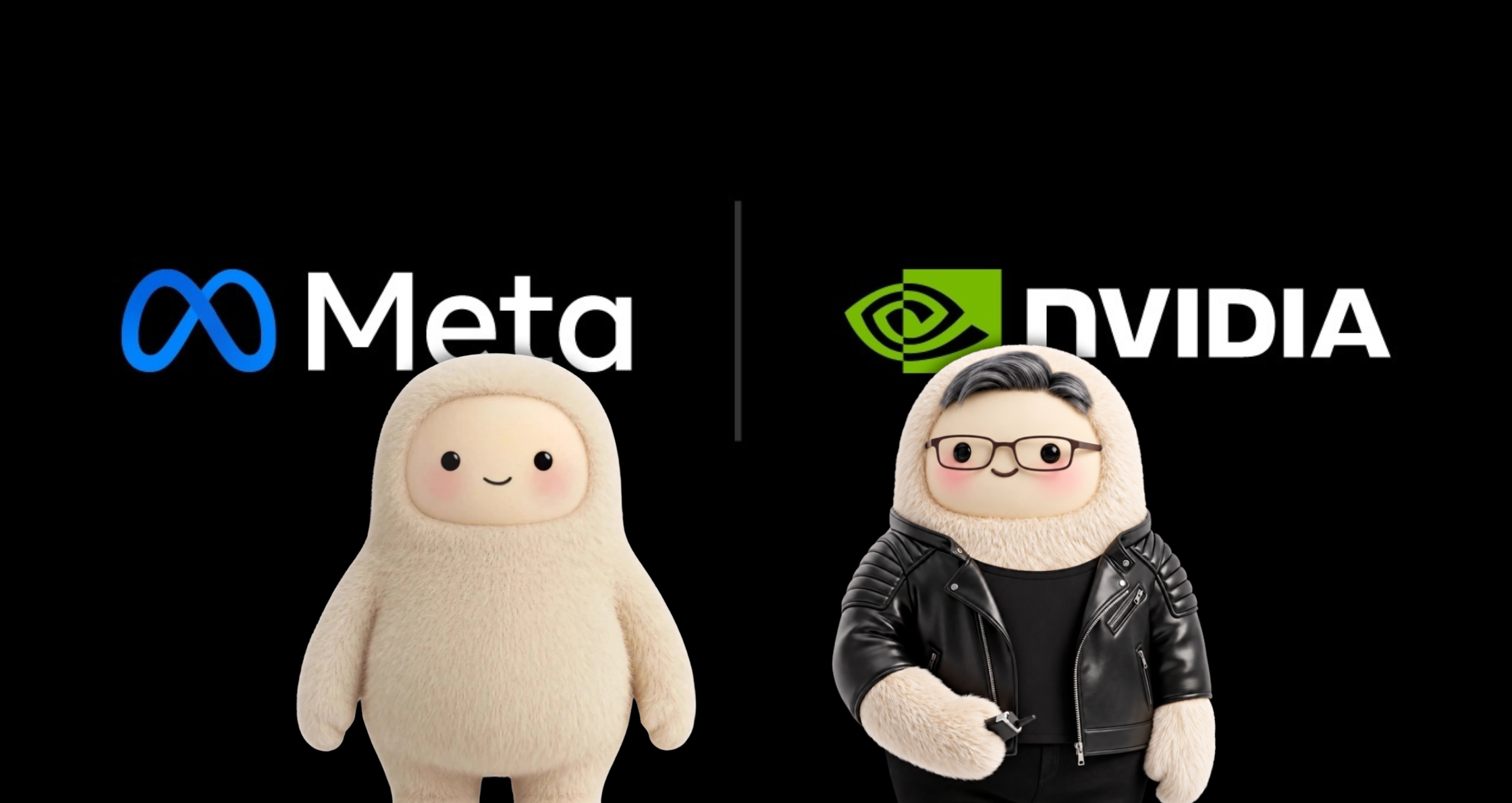
- NVIDIA and Meta today announced they will partner to expand their work on Muse and the Muse family of models to improve inference and training performance, reflecting popular demand for useful AI agents
# NVIDIA and Meta Expand Muse AI Agent Partnership
NVIDIA and Meta have announced an expanded collaboration centered on the Muse family of models, marking a significant deepening of the two companies’ long-term infrastructure partnership. The announcement, dated October 26, 2026, comes amid what NVIDIA describes as surging consumer downloads and frontier-level benchmark performance for Meta’s Muse models and agents since launch.
Muse Model Collaboration
The core of the expanded partnership focuses on improving inference and training performance for Muse and the broader Muse family of models. According to the announcement, Meta’s Muse models and agents leverage NVIDIA’s infrastructure, and the companies intend to partner on optimizations across workflows to maximize performance and improve total cost of ownership.
NVIDIA founder and CEO Jensen Huang characterized AI agents as a new computing paradigm—software that understands goals, reasons, uses tools, and completes work on behalf of users. Meta founder and CEO Mark Zuckerberg described Muse as the vehicle for bringing “personal superintelligence” to everyone, emphasizing the goal of delivering frontier models and personal agents to billions of people.
Security and Monitoring Technologies
Beyond model development, the companies are considering additional technological collaborations. These include NVIDIA OpenShell Reference Architecture, specifically NVIDIA OpenShell for safe deployment, and NVIDIA Sentry for monitoring agent behavior. The press release notes that OpenShell is intended to strengthen agency security, while Sentry supports monitoring across structured, unstructured, and graph data processing.
Infrastructure Deployment Expansion
Meta intends to expand its deployment of NVIDIA infrastructure, including Vera Rubin and Vera CPUs, to support next-generation AI agents with maximum performance per watt. The deployment will also incorporate NVIDIA Spectrum-X Ethernet networking and BlueField-4 to support network efficiency and throughput.
These hardware components represent a full-stack approach to AI infrastructure, spanning compute, networking, and data processing units. For data center operators, the combination of Vera Rubin CPUs, Spectrum-X networking, and BlueField-4 DPUs signals a continued shift toward integrated, high-throughput architectures optimized for AI agent workloads rather than traditional enterprise applications.
Equity Investment
NVIDIA will invest $3 billion in Meta’s equity offering. The press release includes forward-looking statements cautioning that the proposed investment is subject to anticipated completion and any applicable closing conditions, and that actual results could differ materially from expectations.
Market Context
The announcement reinforces what both companies describe as a strong long-term partnership supporting Meta’s AI infrastructure ambitions. For the data center and AI compute market, the collaboration highlights several ongoing trends: the operationalization of AI agents at consumer scale, the convergence of model development with underlying hardware optimization, and the growing importance of security and monitoring layers for autonomous agent systems.
The inclusion of OpenShell and Sentry suggests that enterprise and hyperscale operators are increasingly concerned with safe deployment and behavioral monitoring as agentic AI moves from experimental to production environments. Meanwhile, the infrastructure expansion—Vera Rubin, Spectrum-X, and BlueField-4—indicates that Meta is scaling its physical footprint to match the computational demands of frontier model training and inference.
Operators should note that the partnership spans both software optimization and hardware deployment, reflecting a market dynamic in which model performance is increasingly tied to specific infrastructure choices. The emphasis on total cost of ownership and performance per watt also underscores the operational pressures facing data center operators as AI workloads grow in scale and density.
As with all forward-looking statements, the realization of these plans depends on closing conditions, technological development, market acceptance, and other factors detailed in NVIDIA’s SEC filings.

MegaWatt Intelligence Desk
Hyperscale & Grid Analyst. `More stories by $MegaWatt Intelligence Desk →`