01
Explorecooling
Johnson Controls Unveils 3,500-Ton Magnetic Bearing Chiller for Hyperscale AI Pods
York YMC2 architecture sets new COP 8.2 standard with zero mechanical friction and R-1233zd(E) ultra-low GWP refrigerant.
Direct-to-chip, liquid immersion, high-lift chillers, and thermodynamic efficiency in AI clusters.
cooling
York YMC2 architecture sets new COP 8.2 standard with zero mechanical friction and R-1233zd(E) ultra-low GWP refrigerant.
cooling
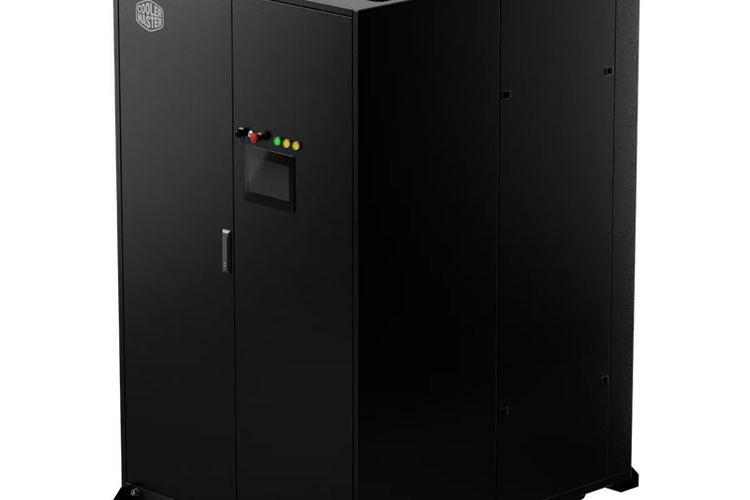
<p data-block-key="c4q7t">PC gaming company expands data center cooling lineup</p>
cooling
<p data-block-key="hmuei">Why additive chemistry is key to coolant performance, corrosion protection and long-term reliability in next-generation data center liquid cooling systems</p>
The signal
York YMC2 architecture sets new COP 8.2 standard with zero mechanical friction and R-1233zd(E) ultra-low GWP refrigerant.

<p data-block-key="c4q7t">PC gaming company expands data center cooling lineup</p>
<p data-block-key="hmuei">Why additive chemistry is key to coolant performance, corrosion protection and long-term reliability in next-generation data center liquid cooling systems</p>
We test the cheap ADT R27A-BK3 card to see what the U.2 SSD to PCIe card slot adapter offers, and how the cooling works The post ADT R27A-BK3 U.2 to PCIe Adapter Review appeared first on ServeTheHome.

In the not-too-distant past, data center infrastructure decisions largely centered on individual components such as racks, servers, power management, and cooling. But AI and high-performance compute (HPC) have changed that model. As compute becomes more powerful and infrastructure more complex, it takes an ecosystem of... The post The AI ecosystem: How partnerships power AI infrastructure appeared first on Schneider Electric Blog.
Evaporative cooling is hard to defend on water-use grounds, but some operators still choose it for its lower upfront cost, higher efficiency, and dry-climate performance.
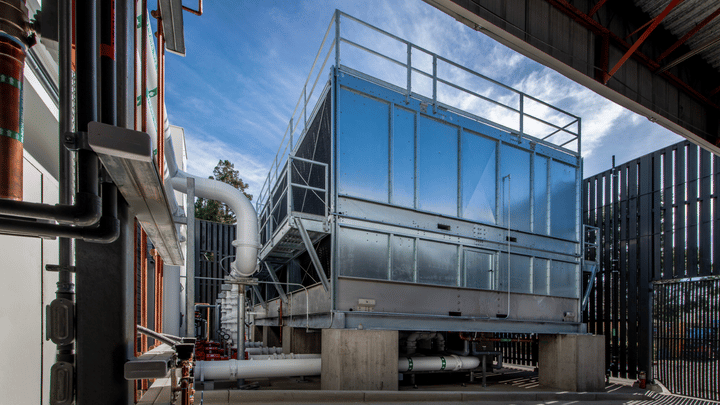
Author: Mark Deguara, Technology Innovation Leader Building an AI data centre in Australia increasingly requires close attention to grid capacity. At the end of Q2 2026, AEMO was tracking 9.0 GW of maximum data-centre connection capacity in the formal transmission connection process, with 52% in... The post AI data centres in Australia: How liquid cooling can stretch a capped grid connection appeared first on Schneider Electric Blog.
General availability of the instances is coming next month, with planned expansion of availability to Europe — bringing an integrated platform for training, inference and large-scale reinforcement learning to cloud customers. A5X instances bring together NVIDIA Vera Rubin NVL72, NVIDIA ConnectX-9 SuperNICs, Google Cloud Virgo Network and Google Cloud’s fourth-generation advanced liquid-cooling technology for demanding […]
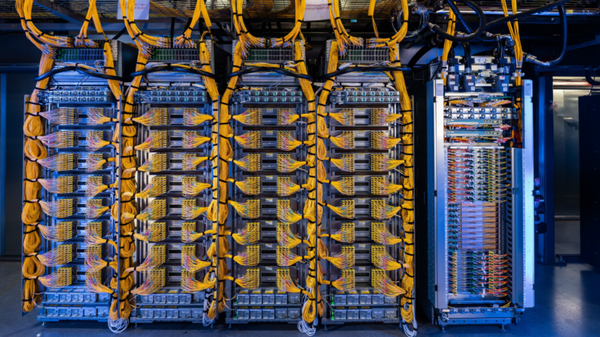
Author: Mayank Srivastav, Director C&SP Segment, India In India, the economics of liquid cooling depend heavily on on-site conditions. Electricity tariffs, demand charges, supply voltage and data centre incentives vary by state. Water pricing and availability also differ by market. Hot, humid conditions in hubs... The post Liquid cooling costs in India: Power tariffs, water charges, and capex appeared first on Schneider Electric Blog.
To most data center operators, the benefit of redundant power and cooling systems is self-evident. Additional systems provide a backup in case of failure. A data center with redundant equipment should experience less downtime, on average, than the same data center operating without such resiliency measures. This may seem like common sense — but can […] The post Survey findings link higher redundancy to lower outage risk appeared first on Uptime Institute Blog.
AI is pushing data center cooling to its limits, so the real advantage comes from integrating smart sensing, motor control, and power management into a single responsive, failure-anticipating system.
Author: Andrew Whitmore, VP of Sales of Motivair, Motivair by Schneider Electric Data center community opposition and local approvals are becoming bigger constraints on capacity development. The issues shaping project review extend well beyond cooling and can include power availability, utility capacity, transmission infrastructure, backup... The post Data center community opposition: How cooling design affects water, noise, and permitting appeared first on Schneider Electric Blog.
Digital Realty’s Osaka campus expands with commencement of construction on a new 24 MW facility designed for high-density computing and advanced cooling SINGAPORE, Oct. 07, 2026 (GLOBE NEWSWIRE) -- Digital Realty ( NYSE: DLR), the world’s largest cloud- and carrier-neutral data center platform,
Five years ago, a typical enterprise data center rack consumed 10-20 kilowatts of power. Today, AI-enabled racks can exceed 100 kilowatts. They weigh as much as an automobile and generate more heat than traditional cooling systems were designed to handle. Those are significant engineering challenges.... The post AI is moving faster than infrastructure. Leaders need a new strategy. appeared first on Schneider Electric Blog.
AI success hinges on infrastructure. Use this five-part framework to evaluate power, cooling, security, cost strategy, and scalability.

N+1 capacity can hide shared-control dependencies, turning many units into a single failure domain. Learn how to design for degraded operation and commission real resilience.
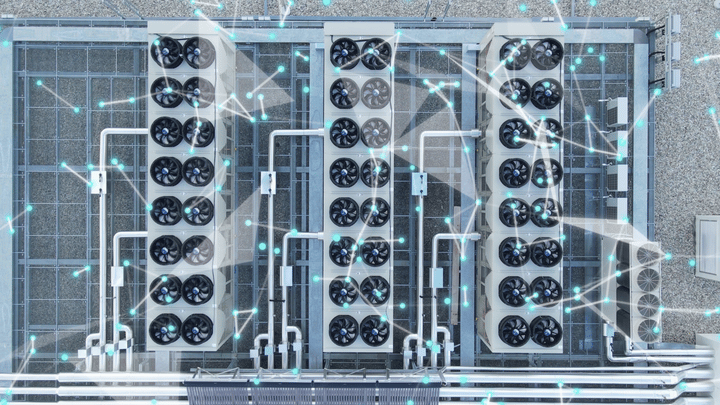
Multi-Megawatt deployment at BCN1 combines dedicated AI capacity, advanced cooling and private connectivity through ServiceFabric®, supporting scalable AI inference services from Barcelona AUSTIN, Texas, Sept. 30, 2026 (GLOBE NEWSWIRE) -- Digital Realty ( NYSE: DLR), the world’s largest cloud- and
Author: Anuj Kudesia, Managing Director SEPSL & Direct BD India has around 18% of the world’s population but only 4% of its freshwater resources. This makes data centre water recycling more than a sustainability metric. Its availability, source, and quality can influence site selection, cooling... The post Using treated and recycled water in Indian data centre cooling appeared first on Schneider Electric Blog.
AI infrastructure requires a systems-level design approach that integrates power, cooling, and compute to optimize efficiency, resilience, and adaptability – not just capacity.

At Data Center World Power, Google’s Tom Garvens detailed how full-stack design, LVDC power, BESS, and liquid cooling are reshaping hyperscale AI while supporting local grids.
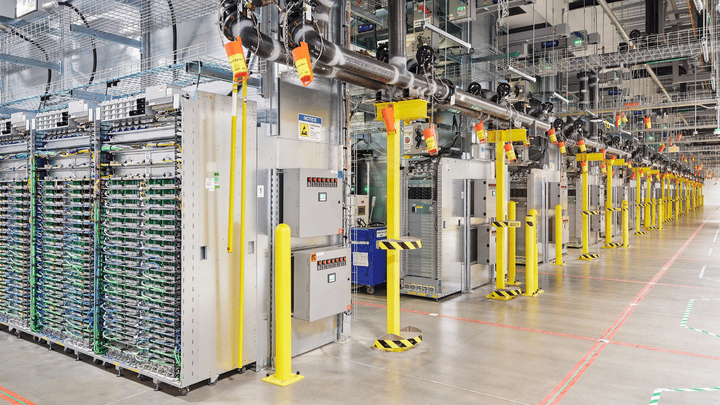
This article is brought to you by CoolIT, an Ecolab Company.Beyond 250 kW a server rack can no longer be cooled by a hybrid approach of liquid and air. At this density a 70/30 liquid-air split leaves 75 kW of air load. The air cooling system needed to move it brings cost and complexity few operators will accept. The answer is near-total heat capture. Liquid takes effectively all the heat, air falls below 1 percent of the load, allowing the server to run fanless.CoolIT builds these loops today fr
